
Few drinks are as instantly recognisable as Johnnie Walker. The square bottle, the slanted label, the striding ma, it is the best-selling Scotch whisk
Few drinks are as instantly recognisable as Johnnie Walker. The square bottle, the slanted label, the striding ma, it is the best-selling Scotch whisky in the world, sold in more than 180 countries. But for all its fame, the range can be confusing. Red, Black, Double Black, Green, Gold, 18, Blue: what is the difference, and which one should you actually buy?
This guide walks through every label in the core range, what each tastes like, and which to reach for depending on whether you are mixing a drink or sipping something special. We will start with a little history and one important point that the marketing rarely makes clear.
The story behind Johnnie Walker
The brand began not with a master distiller but with a grocer. In 1820, a young man named John Walker opened a grocery shop in the town of Kilmarnock in Scotland, after the death of his father led to the family farm being sold. Like many grocers of the time, he sold whisky, and he noticed a problem: the single malts available were inconsistent, varying from cask to cask. So he began blending different whiskies together to create a product that tasted the same every time.
That pursuit of consistency was the foundation of everything that followed. John Walker died in 1857, and it was his son Alexander and grandson Alexander Walker II who turned the family business into a global brand. They introduced the now-iconic square bottle and the distinctive label set at a 24-degree angle, and in 1908 the whisky was officially renamed Johnnie Walker. Two centuries later, it sits at the top of the Scotch world.
First, the basics: Johnnie Walker is a blended Scotch
This is the single most important thing to understand, because it is widely misunderstood: Johnnie Walker is a blended Scotch whisky, not a single malt.
A single malt is the product of one distillery, made entirely from malted barley. A blended Scotch combines malt whiskies with lighter grain whiskies, often drawn from many different distilleries, to create a consistent and balanced final product. Blending is a craft in its own right, the blender’s job is to marry dozens of component whiskies into something greater and more reliable than any single one.
So when you drink a Johnnie Walker, you are tasting the work of a blender rather than a single distillery. That is not a lesser thing. It is simply a different thing, and it is exactly what John Walker set out to do all those years ago.
Johnnie Walker labels explained
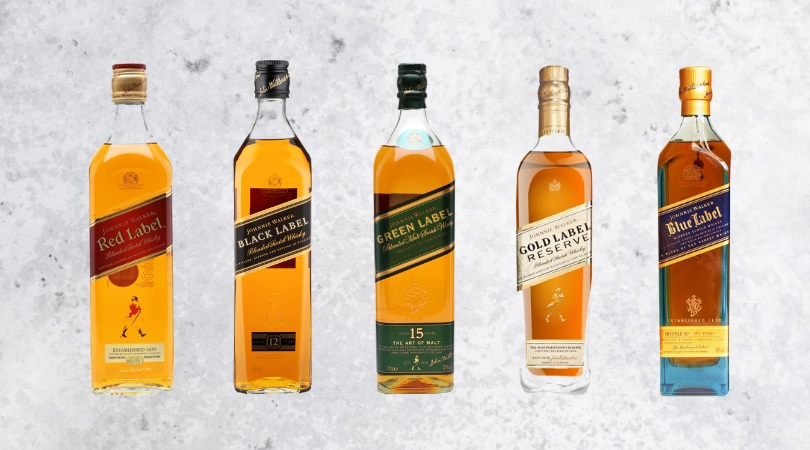
Red Label
The best-seller and the entry point to the range. Red Label is bold, spicy, and fiery, with notes of pepper, cinnamon, and a whisper of smoke. It carries no age statement.
Crucially, Red Label was designed for mixing. Its assertive, spicy character is built to stand up to mixers and ice, which is why it shines in a whisky and soda, a whisky and ginger, or a simple highball, and gets a little lost when sipped neat. This is your everyday, make-a-drink bottle.
Black Label
The classic sipping Johnnie Walker, and for many people the sweet spot of the range. Black Label is a 12-year-old blend, meaning every whisky in it has aged at least twelve years. It is smooth, rich, and rounded, with dried fruit, vanilla, malt, and a gentle backbone of smoke.
This is the lineage that traces back to the brand’s original blend. Where Red is built for mixing, Black is good enough to drink neat or with a single cube of ice, and smooth enough to please almost anyone.
Double Black
A richer, smokier take on Black Label, with no age statement. It leans harder into peat and intensity, with more campfire smoke and a bigger, bolder body. If you like Black but wish it had more punch, Double Black is for you.
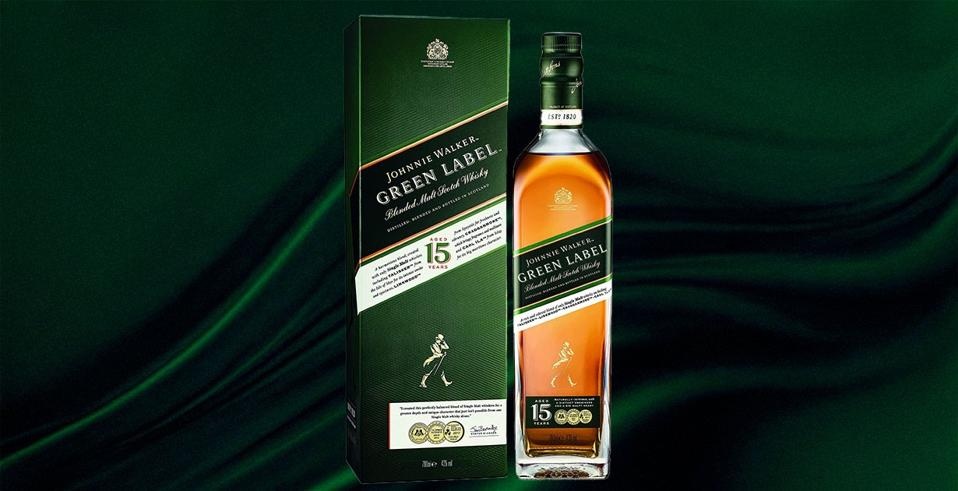
Green Label
Here is the exception. Green Label is a blended malt, made entirely from single malt whiskies, with no grain whisky at all, aged 15 years. It is the only bottle in the core range that is not a standard blended Scotch.
The result is fresh, layered, and complex, drawing on well-known malts to deliver grassy, malty, and smoky notes. It is a favourite among people who want the character of single malts in a beautifully balanced package.
Gold Label Reserve
A luxurious, smooth, and notably sweet blend, with honeyed, creamy, and lightly smoky notes. It carries no age statement and is built for celebrating. Designed to be enjoyed neat or, famously, served well chilled straight from the freezer.
Aged 18 Years
A refined, older blend with a full twelve-plus-six years behind it. Rich and well-balanced, with oak, dried fruit, and a long, warming finish. A step up in depth and elegance from Black, and a lovely sipping whisky.
Blue Label
The pinnacle of the range, and the bottle that is right to call rare and expensive. Blue Label is blended from a small number of exceptional, scarce casks, carries no age statement, and is presented in a numbered bottle. The flavour is smooth, deep, and complex, with honey, dark fruit, and a long, silky, gently smoky finish.
It is a special-occasion whisky, priced accordingly. Whether it is “worth it” is a matter of taste and budget, but it is undeniably one of the most prestigious blends in the world.
Red Label vs Black Label: which should you choose?
This is the question most people are really asking, so here is the short answer.
Choose Red Label if you are making mixed drinks. It is more affordable, and its bold, spicy character is built to cut through soda, ginger ale, or cola in a highball. For everyday drinks and parties, Red is the practical, sensible choice.
Choose Black Label if you want to sip. As a smooth 12-year-old blend, it has the depth and roundness to enjoy neat or over a little ice, and it makes a noticeably more refined drink. For a relaxed evening dram or a gift, Black is the one.
In other words: Red is for mixing, Black is for sipping. Many whisky drinkers keep both on the shelf for exactly that reason. So which Walker you walk with comes down to the moment, and there is no wrong answer.
How to drink Johnnie Walker
For Red Label, lean into mixing. A Johnnie Walker and soda over plenty of ice with a lemon twist is a clean, refreshing classic. Whisky and ginger ale (or spicy ginger beer) is even easier and endlessly drinkable. Red also works well in cocktails that call for a blended Scotch, like a Whisky Highball.
For Black Label and above, keep it simple. Neat, or with a single large ice cube, or with just a few drops of water to open up the aromas. A good tulip-shaped glass like a Glencairn concentrates the aromas and makes a real difference. The older and more premium the bottle, the less you want to dilute or mix it.
Frequently asked questions
Is Johnnie Walker a single malt or a blend? It is a blended Scotch whisky, a combination of malt and grain whiskies from multiple distilleries. The one exception is Green Label, which is a blended malt made entirely from single malts.
What is the difference between Johnnie Walker Red and Black? Red Label is a bold, spicy, no-age-statement blend designed for mixing. Black Label is a smoother, richer 12-year-old blend meant for sipping. Red is the everyday mixer; Black is the sipping whisky.
Is Johnnie Walker good whisky? Yes. As blended Scotch, it is consistent, well-made, and approachable across the range. Black Label in particular is widely regarded as excellent value for a smooth 12-year-old blend.
What is the most expensive Johnnie Walker? Within the core range, Blue Label is the most expensive, blended from rare casks and sold in numbered bottles. The brand also releases limited and collector editions that cost considerably more.
How should you drink Johnnie Walker Black Label? Neat, with a drop of water, or over a single large ice cube. It is smooth enough to enjoy on its own, so there is no need to drown it in mixers the way you might with Red.
You might also like
- 12-Year-Old Scotch: What the Age Really Means
- Bourbon In The Making
- Old Fashioned
- Whiskey Sour
- 15 Tips For Making Cocktails At Home

COMMENTS