
There is a particular kind of cocktail that doesn't announce itself. No elaborate garnish, no five-ingredient shaker situation, no technique that requ
There is a particular kind of cocktail that doesn’t announce itself. No elaborate garnish, no five-ingredient shaker situation, no technique that requires a YouTube tutorial to master. Just a few carefully chosen things in a glass that happen to work together so well you wonder why you haven’t been drinking this your whole life. The Benedict cocktail is exactly that.
Scotch whisky, Benedictine, ginger ale, a glass full of ice. That’s it. Three ingredients, one glass, maybe ninety seconds of your time. And yet what ends up in front of you is a genuinely sophisticated drink. Warming and complex from the Scotch, herbal and honeyed from the Benedictine, bright and effervescent from the ginger ale. It sits somewhere between a Highball and a Sling, impossible to put in a neat category, and completely delicious in any of them.
I came across this one while working through some classic recipes that had quietly fallen out of fashion, and I genuinely don’t understand why this one isn’t more well known. It’s one of those builds that makes you look like you know exactly what you’re doing. Which, after reading this, you will.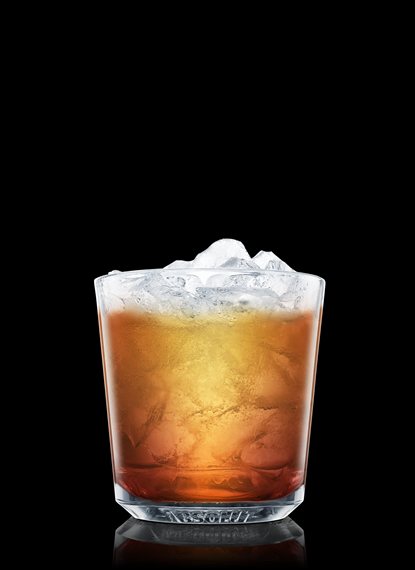
What is the Benedict cocktail?
The Benedict is best served in an old fashioned glass cocktail. A short to medium drink built directly in the glass over ice without shaking or straining. The combination of Scotch and Benedictine is not an obvious one on paper, but it’s a genuinely inspired pairing. The smoky, malty character of Scotch and the sweet, herbal complexity of Benedictine complement each other in a way that feels almost inevitable once you’ve tasted it.
Topping with ginger ale lifts the whole drink — adding sweetness, carbonation, and a gentle warmth that ties the Scotch and the Benedictine together rather than competing with either of them. The result is a drink that is greater than the sum of its parts, and considerably easier to make than it tastes.
It’s worth noting that the Benedict is sometimes confused with the B&B Benedictine and Brandy. Which is a simpler two-ingredient serve often taken as a digestif. The Benedict is a longer, more refreshing drink with the Scotch providing a distinctly different character to brandy, and the ginger ale making it suitable for sipping over an extended period rather than in a single shot.
Best time to enjoy a Benedict
The Benedict works in almost any context where you’d reach for a Scotch-based drink. It’s sophisticated enough for a dinner party and simple enough for a quiet night at home. The ginger ale makes it lighter and more refreshing than a neat Scotch, which opens it up for longer sessions and warmer evenings.
It works particularly well as an aperitif. The herbal complexity of the Benedictine stimulates the appetite in the same way that vermouth does in a Martini, and the Scotch provides enough backbone to feel like a proper pre-dinner drink rather than a soft opener.
It also happens to be one of the best cocktails to make when guests arrive unexpectedly and you want to produce something that feels considered without any preparation time at all. Three ingredients. One glass. Done.
What’s in a Benedict cocktail
Three ingredients, each one doing real work.
Scotch Whisky
Scotch is the backbone of the Benedict and the ingredient that defines its character. A blended Scotch is the right choice here — the softness and balance of a good blend integrates better with the Benedictine and ginger ale than a heavily peated or characterful single malt would.
The Scotch should be present in the drink but shouldn’t dominate it. Think of it as providing the structure and the warmth rather than the starring flavour. That role belongs jointly to the Scotch and the Benedictine together.
Our picks for the Benedict:
Johnnie Walker Black Label — 12-year aged blended Scotch with enough character to hold up against the Benedictine without overwhelming it. Smoke, dried fruit, and vanilla notes that play beautifully with the herbal sweetness of Benedictine.
Chivas Regal 12 — smooth, rounded, and approachable. A classic blended Scotch that integrates seamlessly in mixed drinks without losing its identity. A reliable choice that never disappoints.
Dewar’s White Label — the most accessible option on this list and none the worse for it. Clean, slightly honeyed, and genuinely good value for a cocktail where the Benedictine is sharing the flavour spotlight equally.
Benedictine
Benedictine is a French herbal liqueur with one of the most interesting origin stories in the drinks world. It was first produced by a Benedictine monk named Dom Bernardo Vincelli in the 16th century at the Fécamp Abbey in Normandy, France , or so the legend goes. The modern version was revived and commercialised in the 19th century by wine merchant Alexandre Le Grand, who claimed to have discovered the original recipe.
Whatever the true history, what’s in the bottle is extraordinary. Benedictine is made from 27 different plants and spices, angelica, hyssop, lemon balm, saffron, vanilla, and others whose identities remain a trade secret, steeped in cognac. The result is sweet, herbal, complex, and warming with a honeyed finish that’s unlike anything else in a home bar.
A bottle of Benedictine is one of those purchases that unlocks a surprising number of cocktail recipes. It appears in the Vieux Carré, the Singapore Sling, and the B&B alongside this one. It earns its shelf space many times over.
Ginger Ale
The ginger ale provides the length and the lift that transforms the Benedict from a short spirit-forward drink into a proper cocktail. It adds sweetness, carbonation, and a gentle ginger warmth that ties the Scotch and Benedictine together beautifully.
Use a good quality ginger ale rather than a budget brand. The difference in flavour is noticeable in a drink where the mixer is playing such a visible role. Bundaberg Ginger Ale or a premium brand like Fever-Tree or Q Ginger Ale are all excellent choices. Ginger beer works as a substitute if you want a more intense, spicier ginger character — it changes the drink noticeably but not unpleasantly.
How to make a Benedict cocktail
The Benedict cocktail is a build. Everything goes directly into the glass in order, no shaker required.
Fill an old fashioned glass with ice cubes. Pour in the Scotch and the Benedictine directly over the ice. Stir well for about ten seconds, long enough to chill the spirits and begin diluting them slightly, which opens up the flavour of both.
Top with ginger ale, pour it gently down the side of the glass or over the back of a bar spoon to preserve as much carbonation as possible. Give it one more light stir, just enough to integrate the ginger ale without flattening all the bubbles.
Serve immediately. No garnish is strictly necessary but a twist of lemon peel expressed over the glass and dropped in adds a bright citrus note that complements the herbal character of the Benedictine beautifully. A slice of fresh ginger on the rim is another option that suits the drink’s flavour profile.
Print
Benedict Cocktail
- Total Time: 5
Description
Scotch whisky, Benedictine, and ginger ale over ice — a simple, sophisticated cocktail that’s greater than the sum of its parts. Built in the glass in under two minutes.
Ingredients
- Ice cubes
- 3/4 measure (3/4 oz) Scotch whisky
- 3/4 measure (3/4 oz) Benedictine
- Ginger ale to top
- Lemon twist to garnish (optional)
Instructions
- Fill an old fashioned glass with ice cubes
- Pour Scotch whisky over the ice
- Add Benedictine
- Stir well for 10 seconds to chill and slightly dilute
- Top with ginger ale, pouring gently down the side of the glass
- Stir once more lightly to integrate
- Garnish with a lemon twist if desired and serve immediately
Notes
Use a blended Scotch rather than a heavily peated single malt. The balance of the drink works better with a softer Scotch. Good quality ginger ale makes a noticeable difference. Ginger beer can be substituted for a spicier, more intense version.
- Prep Time: 5
- Category: Cocktails
- Method: Blended
Nutrition
- Serving Size: 1
- Calories: 175
Why Benedictine deserves a place in your home bar
If Benedictine isn’t already in your collection, the Benedict cocktail is a good enough reason to put it there. It’s a genuinely versatile liqueur that appears across an impressive range of classic cocktails, and it’s the kind of bottle that tends to disappear faster than expected once people discover what it can do.
Beyond the Benedict cocktail, try it in a B&B. Equal parts Benedictine and brandy, served neat or over ice as an after-dinner drink. Or a Vieux Carré — rye whiskey, cognac, sweet vermouth, Benedictine, and bitters, stirred over ice. Or simply with ice and a splash of soda as a gentle, aromatic long drink on its own.
It’s one of those bottles that makes you a better host every time you reach for it.
You might also like
More Whiskey cocktails:
More classic cocktails:
Old Fashioned
Negroni
Naked Martini
From Best Gear and Guides:
Best Whiskey Glasses
The Best Cocktail Shakers of 2026
Best Jiggers for Your Home Bar
Whiskey 101 — A Beginner’s Guide

COMMENTS