
The Complete Bartender’s Spirits Glossary: Every Bottle Worth Knowing
Whether you’re stocking a home bar for the first time or you’ve been mixing drinks for years, there’s always a bottle that makes you pause and think — what exactly is this? This guide is your reference. We’ve pulled together the most useful spirits and liqueurs across the alphabet, covering what they taste like, where they’re from, and how they actually get used behind the bar. Bookmark it, print it, stick it in your bar cabinet.
B
B&B A classic ready-made liqueur that blends Bénédictine with brandy. Rich, herbal, and warming — great over ice or as a digestif.
Bacardi One of the most famous Caribbean rum producers, best known for their light, clean white rum — the backbone of a Daiquiri or a Mojito.
Baileys Irish Cream A cream liqueur built on Irish whiskey and flavoured with chocolate. Smooth, indulgent, and far more versatile than people give it credit for. Try it in a Baileys Alexander or a Baileys Chocolate Covered Cherry shot.
Banane, crème de A liqueur made from spirit and bananas. Sweet and tropical, it pairs well with rum and works in tiki-style cocktails.
Banyuls A naturally sweet red wine (vin doux naturel) from Roussillon in southwest France. Rarely used in cocktails but worth knowing as an after-dinner pour.
Bénédictine A French herbal liqueur made from a secret recipe of 27 plants and spices. Rich, honeyed, and complex — excellent in the Bobby Burns and the B&B.
Bitters Concentrated botanical extracts made from roots, fruits, and peels — typically gentian, quinine, and orange — macerated in high-proof spirits. A few dashes transform almost any cocktail. Key brands include Angostura, Peychaud’s, and Underberg. Bitter aperitifs like Campari and Fernet-Branca fall into a related but distinct category.
Blackberry liqueur (Crème de Mûre) A fruit liqueur made from ripe blackberries macerated in spirit. Popular across Northern Europe — known as Kroatzbeere in Germany and Jeżynówka in Poland. Excellent in a Bramble.
Blend / Blended whisky On the Scotch side, a blend combines malt whisky and grain whisky from multiple distilleries. American blended whiskey mixes straight whiskeys or whiskey with neutral spirit. Blended rye similarly combines from several distilleries. Blends are designed for consistency and approachability.
Borovička A Central and Eastern European spirit similar to gin, distilled from juniper berries. The national spirit of Slovakia — clean, juniper-forward, and best served ice cold.
Bourbon American whiskey originally from Bourbon County, Kentucky, made from a mash of at least 51% corn and aged in new charred oak barrels. Vanilla, caramel, and oak are the signature notes. Key brands: Jim Beam, Four Roses, Maker’s Mark, Old Forester.
Brandy A spirit distilled from fermented fruit — most commonly grapes, but also apples (Calvados), plums (Mirabelle), and others. The base spirit for an enormous range of cocktails from the Sidecar to the Stinger.
Byrrh A French aperitif based on red wine and flavoured with quinine and orange peel. Bittersweet and lightly fortified — serve cold on ice.
C
Cacao, crème de A chocolate liqueur made from roasted cocoa beans. Comes in brown (darker, richer) and white (paler, lighter) versions. Essential in a Brandy Alexander and the Barbary Coast.
Calvados A brandy distilled from apple cider in the Calvados region of Normandy, France. ABV typically 40–45%. The finest comes from the Pays d’Auge. Use it anywhere brandy is called for when you want an apple-forward, orchard character.
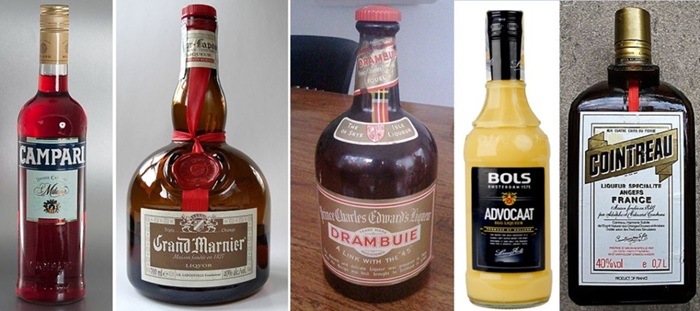
Campari An Italian bitter aperitif, vivid crimson in colour, with a complex bittersweet flavour built on herbs, roots, and orange peel. Non-negotiable for a Negroni or an Americano.
Canadian whisky Distilled in Canada from a mash of fermented cereals including rye, malted rye, and corn. Typically light and smooth. ABV 32.5–43.5%. Key brands: Black Velvet, Canadian Club, Crown Royal, Seagram’s VO.
Cassis, crème de A sweet liqueur made from blackcurrants, the best coming from Dijon in Burgundy. The defining ingredient of a Kir and a Kir Royale.
Chambéry A dry white French vermouth produced in the Chambéry region. Lighter and more delicate than Italian vermouth. Key brands: Boissière, Dolin, Gaudin.
Champagne A sparkling white wine produced only in the Champagne region of France. Its characteristic bubbles come from secondary fermentation in the bottle. Used in cocktails from the French 75 to the Bellini.
Chartreuse A French herbal liqueur made by Carthusian monks at Voiron. Green Chartreuse (55% ABV) is intensely herbal and aromatic. Yellow Chartreuse (40%) is sweeter and more approachable. Both are brilliant in cocktails or sipped as a digestif.
Cherry brandy A liqueur made from cherries macerated in alcohol — richer and sweeter than Kirsch, which is a clear distillate. Key brands: Cherry Marnier, Peter Heering.
Cinzano Italian vermouth available in sweet red (Rosso), dry white (Secco), and sweet white (Bianco). A solid all-purpose vermouth for Martinis and Negronis.
Coffee liqueur Made from roasted coffee beans; there are countless versions on the market. The two you’ll reach for most are Kahlúa (sweeter, more syrupy) and Tia Maria (lighter, more espresso-forward). Essential for a White Russian or an Espresso Martini.
Cognac A brandy made from two distillations of white wine from grapes grown in the Charente region of France (40% ABV). The finest grade is Fine Champagne, a blend from both Grande and Petite Champagne. The backbone of the Sidecar and the Brandy Alexander.
G
Galliano A tall, golden Italian liqueur flavoured with herbs, spices, and vanilla. You’ll know it from the Harvey Wallbanger and the Golden Cadillac. Sweet and complex — use sparingly, it’s a flavour bomb.
Genever The Dutch ancestor of gin, traditionally sold in stoneware crocks. Also known as Hollands or Schiedam (after the Dutch city where distilling was centred). Distilled from fermented rye, barley, and maize, then flavoured with juniper, coriander, caraway, and aniseed. ABV around 40%. Malty and full-bodied compared to London Dry.
Gentiane A bittersweet aperitif liqueur built on gentian root — the same botanical that gives tonic water its bite. Used as a cocktail ingredient and a low-ABV digestif.
Gin A grain spirit flavoured primarily with juniper and coriander. Its name derives from Genever. London Dry — crisp, dry, lightly flavoured — is the cocktail world’s workhorse. Plymouth Gin is slightly sweeter and softer. Key brands: Beefeater, Tanqueray, Gordon’s, Hendrick’s.
Glayva A Scotch whisky liqueur flavoured with honey, herbs, and spices (40% ABV). Sweeter and more accessible than straight whisky — good as an after-dinner sipper.
Goldschläger A cinnamon schnapps with tiny flakes of real gold leaf floating in it. Sweet, spicy, and visually dramatic — a popular shot ingredient.
Grand Marnier A French liqueur built on cognac and bitter orange peel (40% ABV). Richer and more complex than triple sec — the better choice when a cocktail can carry it, such as a Cadillac Margarita.
Grappa An Italian pomace brandy distilled from grape skins, seeds, and stems left after winemaking (40% ABV). Rustic and robust — traditionally served ice cold as a digestif.
Green Chartreuse See Chartreuse above. The green version is the stronger (55% ABV) and more herbaceous of the two — a genuine cocktail powerhouse.
Grenadine A red syrup flavoured with pomegranate. Not alcoholic. Essential in a Tequila Sunrise, a Singapore Sling, and dozens of other classics. Make your own from pomegranate juice and sugar for a far superior result.
L
Lillet A French aperitif wine — dry white (Blanc), rosé (Rosé), and now red (Rouge). Lillet Blanc was originally the vermouth called for in a Vesper Martini. Lightly bitter, citrus-forward, and elegant served cold with orange peel.
Lowland malt A Scotch single malt distilled south of the Highland line, typically lighter, more floral, and more approachable than Highland or Islay malts. Worth knowing when recommending whiskies to beginners.
M
Madeira A fortified wine from the Portuguese island of the same name. Four main styles: Bual and Malmsey (fruity and sweet, good for dessert or cocktails) and Verdelho and Sercial (lighter and drier, better as aperitifs). Extraordinary shelf life once opened.
Malibu A rum-based coconut liqueur (21% ABV). Soft, sweet, and tropical. The classic base for a Piña Colada, and useful whenever a cocktail needs a coconut lift.
Malt whisky Scotch whisky made exclusively from malted barley and distilled in pot stills. A single malt comes from one distillery; a vatted (or blended) malt is a mix of single malts from multiple distilleries.
Mandarine A liqueur made from tangerine peel and cognac. Complex and citrusy — a more refined option than generic orange liqueurs. Key brands: Mandarine Napoléon, Cartron.
Maraschino An Italian cherry liqueur made from the Marasca cherry, native to the Trieste region. Dry, nutty, and subtly floral — very different from syrupy cocktail cherries. Essential in a Last Word, an Aviation, and the Chancellor.
Marc The French term for pomace brandy — the equivalent of Italian Grappa — distilled from the leftover skins and seeds after winemaking.
Marsala A Sicilian fortified wine, most familiar as a cooking ingredient but also worth serving as a dessert wine.
Menthe, crème de A sweet mint liqueur, available in green and white versions (25% ABV). A classic ingredient in a Grasshopper or a Stinger. Use it with restraint — it’s intense.
Mezcal (Mescal) A Mexican spirit distilled from agave — broader than Tequila, which must use blue agave specifically. Mezcal can be made from many agave varieties and is typically smokier. Sometimes sold with an agave worm in the bottle.
Midori A Japanese sweet melon liqueur, vivid green in colour. Distinctive and fun in Martini riffs and tropical cocktails — the Midori Sour being the most famous.
Mirabelle A French eau-de-vie (clear fruit brandy) distilled from small yellow plums grown in Lorraine. Intensely fruity and aromatic — one of Alsace’s great digestifs.
R
Raspberry liqueur (Framboise) Made by macerating raspberries in spirit. If the base is grape brandy and the result is distilled, you get raspberry brandy — drier and more intense.
Ratafia A mixture of fresh grape juice and Champagne-area brandy. Sweet and grapey, somewhere between a wine and a liqueur.
Ricard A French aniseed-flavoured spirit — essentially a Pastis. Served diluted with cold water (it turns milky), traditionally with ice.
Rock and Rye An American liqueur based on rye whiskey with lemon or orange flavouring, sold with a lump of rock candy in the bottle. Old-fashioned and charming — worth finding if you love whiskey-based liqueurs.
Rum Distilled from sugarcane juice or molasses (40% ABV), imported mainly from the Caribbean. Styles range from light-bodied white rum (Bacardi, Carta Blanca) to golden (Appleton, Mount Gay) to dark and funky (Myers’s, Lemon Hart). The spirit of the Daiquiri, the Mojito, and the Dark and Stormy.
Rye whiskey American whiskey made from a mash of at least 51% rye, historically produced in Pennsylvania and Maryland. Spicier and drier than Bourbon. Canada makes its own rye-forward style. Essential for a proper Old Fashioned or a Manhattan.
S
Sabra An Israeli liqueur flavoured with orange and chocolate. A nice after-dinner pour or a cocktail addition when you want a Middle Eastern flavour profile.
Sambuca An Italian liqueur strongly flavoured with anise and elderflower. Traditionally served con la mosca — with three coffee beans floating in it, representing health, happiness, and prosperity.
Schnapps A broad category. European schnapps (particularly German and Scandinavian) is a dry, clear grain or fruit spirit with relatively little sweetness, similar to Aquavit. American schnapps tends to be much sweeter and more fruit-forward — they’re quite different despite the shared name.
Scotch whisky A grain or malt spirit made only in Scotland. Blended Scotch (50–80% grain whisky balanced with malt) is the everyday category — Ballantine’s, Bell’s, Chivas Regal. Pure malt (single malts and blended malts) includes names like Glenfiddich, Aberlour, and The Glenlivet. Read more in our full whisky guide.
Sherry A blended wine from white grapes grown in the Jerez district of Spain, fortified with brandy. Fino is pale, dry, and delicate; Oloroso and Amoroso are rich and sweet; Manzanilla is an especially dry fino with a coastal saltiness. Underused in cocktails — try a Sherry Cobbler.
Single malt See Scotch whisky above. A whisky from one distillery, made from 100% malted barley.
Sloe gin A gin-based liqueur infused with sloe berries (the fruit of the blackthorn bush). Deep red, tart-sweet, and warming. Delicious in a Sloe Gin Fizz or just over ice.
Southern Comfort An American liqueur built on bourbon and peaches, produced in St Louis, Missouri. Sweet and approachable — the spirit of the Scarlett O’Hara cocktail.
Strega A golden Italian herbal liqueur made from over 70 herbs and spices. Intensely aromatic — saffron gives it its distinctive yellow colour. A digestif by tradition, but increasingly found in craft cocktails.
Strawberry liqueur Made from strawberries macerated in spirit. Bright, sweet, and summer-ready. Key brands: Cartron, Monin. Great in a Strawberry Daiquiri or a simple spritz.
Suze A French aperitif liqueur built on gentian root (16% ABV). Bittersweet and earthy — the key ingredient in the White Negroni alongside gin and dry vermouth.
Sugar syrup (Simple syrup) Equal parts sugar and water, dissolved together. Not alcoholic. The most important sweetener in the cocktail world. Gomme syrup adds gum arabic for a silkier mouthfeel. Make it at home in five minutes — your cocktails will thank you.
How to Use This Guide
This spirits and liquor glossary covers the bottles that come up again and again in cocktail recipes — the ones you need to know to understand a recipe, stock a home bar, or navigate a bottle shop confidently. For every spirit mentioned here, we have recipes using it on the site. Follow the links, or explore by spirit category in the menu above.
Want to go deeper on a particular spirit? Start with our guides to Whiskey, Gin, Rum, Vodka, and Brandy.